
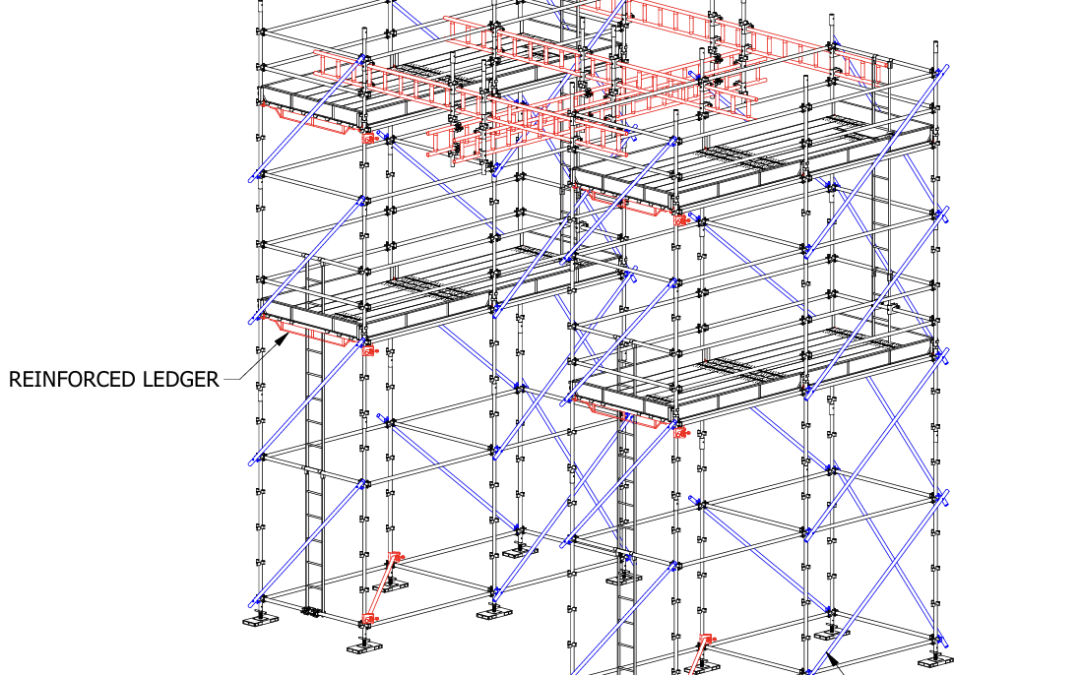
When scaffolding is used as part of a controlled deconstruction process, it may need to do far more than provide access for workers.
In some projects, the scaffold itself becomes an important part of the temporary works system, supporting equipment and loads associated with the dismantling process. This requires careful consideration of the loads, stability, connections and overall behaviour of the scaffold throughout the work.
For this project, Scaffold Design was tasked with developing a purpose built scaffold structure to safely support rigging equipment during the controlled deconstruction of a large industrial structure.
The Challenge
The project presented a specific engineering challenge.
The scaffold needed to provide a stable and secure platform while accommodating loads generated by rigging equipment during the deconstruction process. Unlike a conventional access scaffold, the structure therefore had to be designed around the requirements of the dismantling operation.
Rigging activities can introduce loads that need to be carefully considered during design. The scaffold needed to remain stable and suitable for its intended purpose while the industrial structure was progressively dismantled.
The design also had to integrate with the wider project requirements and the sequence of work planned by the project team.
This meant that simply providing a standard access scaffold was not sufficient. The scaffold needed to be purpose designed around the actual application and loads expected during the project.
The Solution
Working closely with the project team and engineer, we developed a fully engineered scaffold design specifically for the rigging requirements.
The design provided the required support for the rigging equipment while maintaining a stable and secure scaffold structure throughout the controlled deconstruction process.
Rather than treating the scaffold as a standalone access structure, the design considered how it would interact with the wider deconstruction operation.
This approach allowed the scaffold to form part of the planned temporary works solution, supporting the project team in carrying out the dismantling process safely and efficiently.
The design process focused on understanding the intended use of the scaffold, the loads that needed to be accommodated and the conditions under which the structure would operate.
Engineering Before Erection
Projects involving rigging and controlled deconstruction demonstrate why scaffold design should be considered before erection begins.
A scaffold that looks suitable from an access perspective may not necessarily be suitable for supporting additional equipment or temporary loads.
By establishing the intended use and loading requirements during the design stage, potential issues can be identified before the scaffold is erected.
For specialist applications, this can be particularly important. The scaffold may need to support equipment, accommodate unusual loading conditions or interact with other temporary works on the project.
A properly engineered design provides the project team with a clear basis for construction and use, helping ensure that the scaffold is appropriate for its intended purpose.
A Purpose Built Temporary Structure
This case study highlights an important point about modern scaffolding.
Scaffolding is not always simply a temporary access system. Depending on the application, it can form an integral part of a construction, maintenance, installation or deconstruction process.
When scaffolding is required to support rigging equipment, the design needs to reflect that specific function.
The solution developed for this project provided the required rigging support while allowing the industrial structure to be dismantled in a controlled and efficient manner.
By working with the project team and engineer from the design stage, the scaffold could be developed around the actual requirements of the operation rather than adapting a standard scaffold after the fact.
The Importance of Early Design
The earlier the scaffold requirements are understood, the easier it is to develop an effective solution.
Providing information such as the intended rigging equipment, loading requirements, scaffold location, support conditions and planned deconstruction sequence allows the design process to address the key engineering considerations from the beginning.
This can help reduce uncertainty on site and provide the erection team with a clearly defined design to work from.
At Scaffold Design, our approach is based on engineering before erection. We provide professional scaffold design solutions for projects where standard access arrangements are not enough.
Whether the requirement is for access, temporary support, rigging assistance or another specialist application, the design should start with an understanding of what the scaffold actually needs to do.
Need a Scaffold Designed for a Specialist Application?
If your scaffold needs to support rigging equipment, temporary loads or other specialist requirements, speak to Scaffold Design before erection begins.
Engineering before erection.
Send us a message
We'll get back to you within one working day.
info@scaffolddesign.co.za
PHONE
+27 76 763-9791
BUSIESS HOURS
Mon-Fri: 07:30 - 17:00
SERVICE AREA
Nationwide, South Africa